
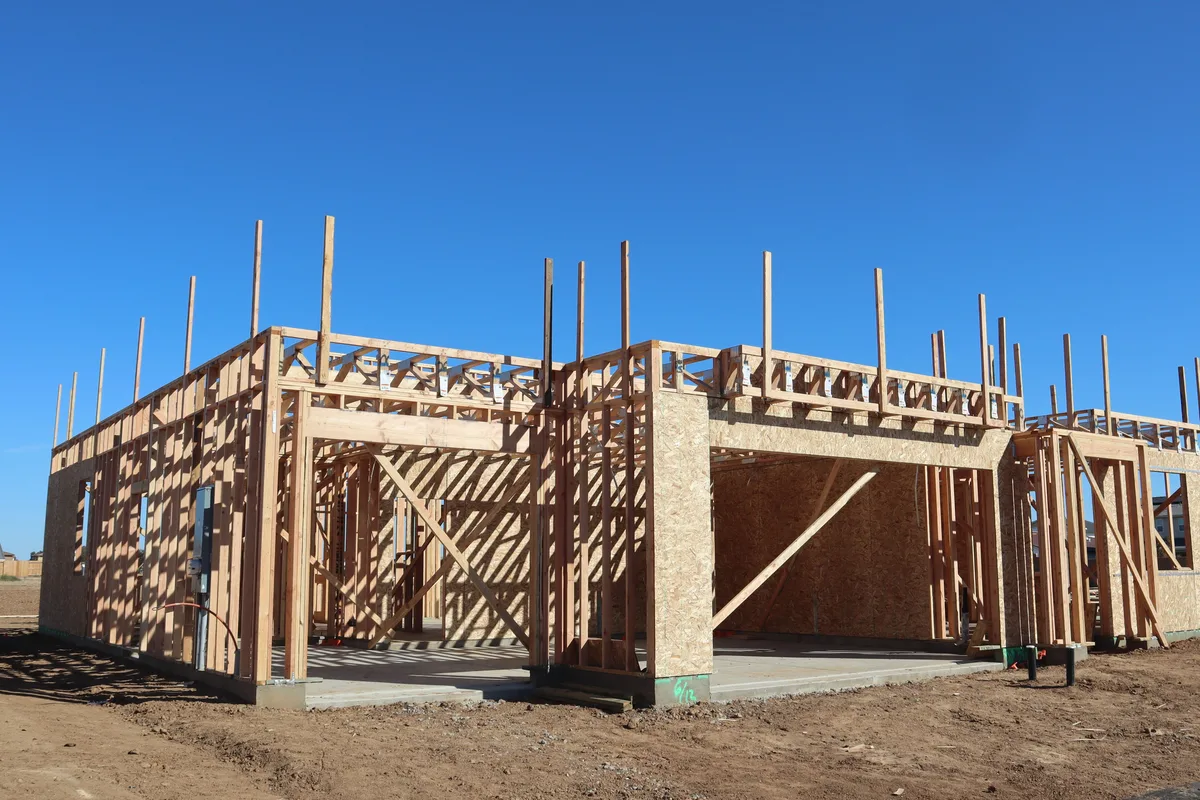
House Wrap and Wall Insulation in Mansfield, OH
House wrap and wall insulation in Mansfield, OH: weather-resistive barrier, taped seams and flashing under every wall..
Siding is the raincoat; the wrap is the layer that actually keeps the wall dry. A weather-resistive barrier under the cladding sheds the water that inevitably gets past the panels, while letting water vapour from inside the house escape so the wall can dry. On homes sided before wrap was standard, and on homes where the original felt or wrap has torn and aged out, this hidden layer is the difference between a wall that lasts and sheathing that slowly softens at every corner.
The craft is in the laps and the tape. Wrap is shingled so upper courses overlap lower ones, seams are taped, and window and door openings are flashed into the wrap in the right order, sill first, then sides, then head, so every path water can take leads outward and down. Rushed wrap with reversed laps is worse than no wrap, because it funnels water into the wall and hides the fact. The professional will happily show you the sequence at your own window before the siding covers it.
While the wall is open, a thin fanfold or foam underlayment can be added under the new siding to flatten minor waviness and add a small insulation gain, and it is the practical moment to air-seal the obvious leaks at penetrations. None of this replaces cavity insulation, and it will not be sold to you as if it does, but on older Mansfield homes the combination of a tight wrap, sealed penetrations and a flat underlayment makes the new wall feel noticeably more solid and quiet.
Mansfield walls take the full Ohio cycle: lake-effect snow, freeze and thaw, spring storms and humid summers. Work on house wrap and wall insulation here has to be planned for panels that move with the temperature and flashing that sheds water in every season, and the professional who visits will talk through how your specific wall handles each one.
Signs the Hidden Layer Has Failed
- Water stains or soft sheathing showing at wall bottoms or corners
- Original siding went up with no wrap or only aged felt
- Drafts trace to exterior walls and outlets on windy days
- Paint or interior plaster blisters on outside walls
- You are replacing siding anyway and the wall will be open once
How Wrap Work Runs
Wrap work happens inside a siding job, in the window between tear-off and hanging. The wall is inspected, damaged sheathing replaced, then wrap is applied course by course from the bottom up, taped, and flashed at every opening before panels cover it. It adds hours, not days, to a typical Mansfield job, and it is photographed before it is covered when you want a record of what is behind your walls.
- Open and inspect. The stripped wall is checked for soft sheathing and old flashing failures.
- Repair first. Damaged sheathing is replaced before any wrap goes on.
- Wrap bottom-up. Courses lap shingle-style so water always sheds outward.
- Tape and flash. Seams are taped; windows and doors are flashed sill, sides, head.
- Seal penetrations. Bibs, vents and fixtures are sealed before the panels cover them.
On the visit, the professional measures every run the house wrap and wall insulation touches, checks the wrap and sheathing at the corners, and looks at how the existing trim, soffit and fascia are holding up. You hear what is sound, what is not, and what can wait, before any material is ordered.
The written scope that follows lists the panel profile and colour, the wrap and flashing plan, the repair work under the cladding, and the price. If part of the wall only needs repair, the scope says so. Nothing is padded into a full replacement to make the ticket bigger.
What Wrap and Underlayment Cost in Mansfield
Wrap is one of the least expensive lines in a siding scope and one of the most valuable, priced by the square foot of wall with flashing at openings included. Fanfold or foam underlayment adds a modest per-square cost. Because the wall has to be open, this work is almost always scoped as part of a replacement or installation rather than on its own, and the written scope lists it as its own line so you can see it is really in the job.
Protecting the Layer You Cannot See
The wrap protects you quietly for decades as long as the cladding above it stays intact: repair cracked panels promptly, keep caulk sound at penetrations, and never let a contractor cut the siding for a new fixture without sealing the penetration back into the wrap.
Questions About House Wrap and Wall Insulation
My home has old felt paper under the siding. Is that enough?
Intact felt works as a basic barrier, but after decades it is usually brittle, torn at fasteners and missing at repairs. When the wall is open for new siding, replacing it with a modern taped wrap is inexpensive insurance, and the professional will show you the felt's actual condition before recommending either way.
Does house wrap help with energy bills?
Indirectly, yes. A properly lapped and taped wrap cuts air leakage through the wall assembly, which is a real slice of heating loss in older Ohio homes. It is not insulation by itself, but paired with sealed penetrations it tightens the wall noticeably.
Can wrap be added without replacing the siding?
Not practically. The wrap lives behind the cladding, so it is installed when siding comes off. That is exactly why it belongs in every replacement scope: the one time the wall is open is the one time the hidden layer can be made right.
Talk to a Local Siding Professional
One call reaches a local siding professional directly about house wrap and wall insulation on your home. The visit starts with measurement, not a sales pitch.
Questions about house wrap and wall insulation on your own house are easier to answer at the wall than over a website. One call reaches a local professional directly, and the visit starts with measurement, not a sales pitch. For the insulation side of the wall assembly, the U.S. Department of Energy insulation guidance explains how wall insulation and air sealing work together.